
Organic vs Natural: What’s Actually in the Bottle
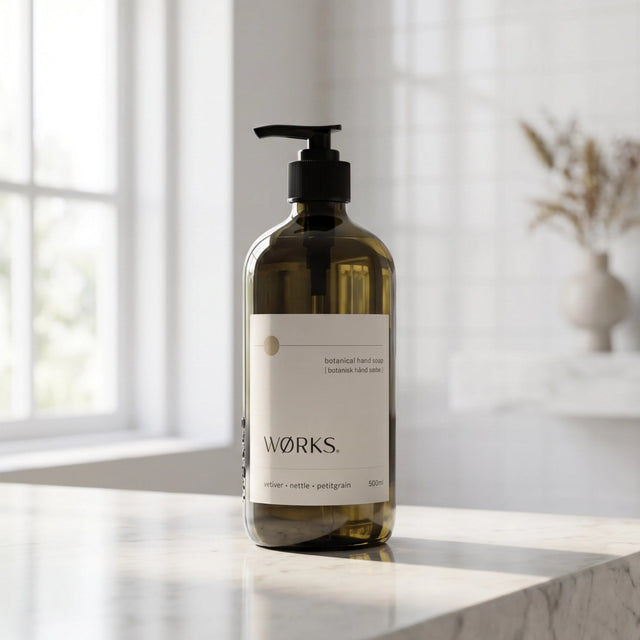
Walk down any pharmacy aisle and you’ll see ‘natural’ on products that contain ingredients synthesised in a petrochemical plant. You’ll see ‘botanical’ on formulas whose active base is as far from a plant as a dishwashing liquid.
The word ‘natural’ is unregulated in the Australian beauty industry. It means precisely nothing, legally, technically, or in terms of what’s actually in the formula.
‘Organic’ is different.
What Certified Organic Actually Means
Certified organic means the raw ingredients were grown without synthetic pesticides, herbicides, or fertilisers, and processed according to documented standards that a certifying body has verified and audits regularly. It requires traceability from the source material to the finished product. A certifying body: ACO, COSMOS, USDA Organic, or similar, must have independently audited and approved the claim.
In Denmark and across Scandinavia, the letter Ø has been the official government symbol for certified organic products since 1987, the only labelling of its kind backed by state certification standards. WØRKS adopted the Ø deliberately. It’s not a design choice. It’s a statement about the ingredients: certified organic, verified, traceable.
What ‘Natural’ Usually Means on a Label
In practice, ‘natural’ on a beauty product can legally mean one botanical ingredient in a formula otherwise composed of synthetic detergents. It can mean a synthetic fragrance compound derived, extremely distantly, from a natural source. It can mean plant-derived surfactants that undergo the same degree of industrial processing as their petroleum equivalents. Or it can mean nothing specific at all, no standard, no certification, no minimum requirement.
This matters when the ‘natural hand wash’ a customer buys is actually a coco glucoside base, a surfactant derived from coconut oil, but processed and functioning identically to conventional synthetic detergents. The coconut origin doesn’t change the chemistry that strips skin barrier lipids at the same rate as sodium lauryl sulfate.
Why WØRKS Uses Certified Organic Ingredients
The base of every WØRKS hand and body soap is 98% certified organic olive and coconut oils, the oils themselves, not a surfactant derivative. The soap is made by saponification: the traditional method of combining oils with an alkali to produce soap and glycerin. No sulphates, no glucosides, no synthetic detergent base of any kind.
The creams and balms are built on five gold-standard plant oils: sweet almond, macadamia, soybean, plus shea and cocoa seed butters, all biocompatible, all chosen for skin barrier support rather than cost or production convenience.
We use certified organic ingredients because they produce better formulas, and because the certification means the claim is verifiable rather than decorative. The Ø in our name is the proof of that.
How to Read a Label
When evaluating any product claiming to be ‘natural’ or ‘organic’: look for a named certifying body. Check the ingredient list: certified organic products list organic ingredients with an asterisk or designation. Watch the first five ingredients, which constitute the majority of the formula. If they’re synthetic detergent bases, the botanical claims that follow them are largely cosmetic.
Ignore ‘derived from’ language. ‘Derived from coconut’ doesn’t mean the resulting ingredient is natural in any meaningful sense.
Read our full ingredient story →
The Ø in WØRKS is the Danish symbol for certified organic. Hand-filled in Melbourne from certified organic oils.
What’s in the bottle matters more than what’s on it.
0 Comments
There are no comments for this article. Be the first one to leave a message!